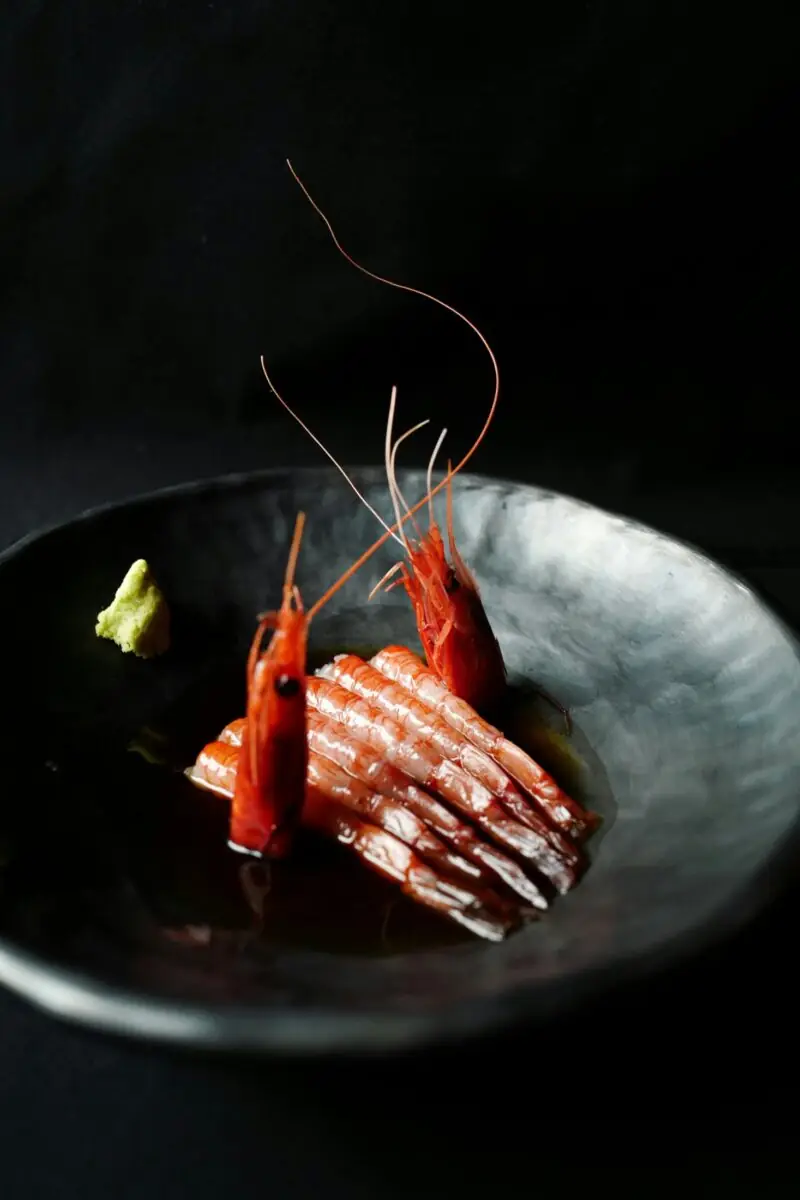
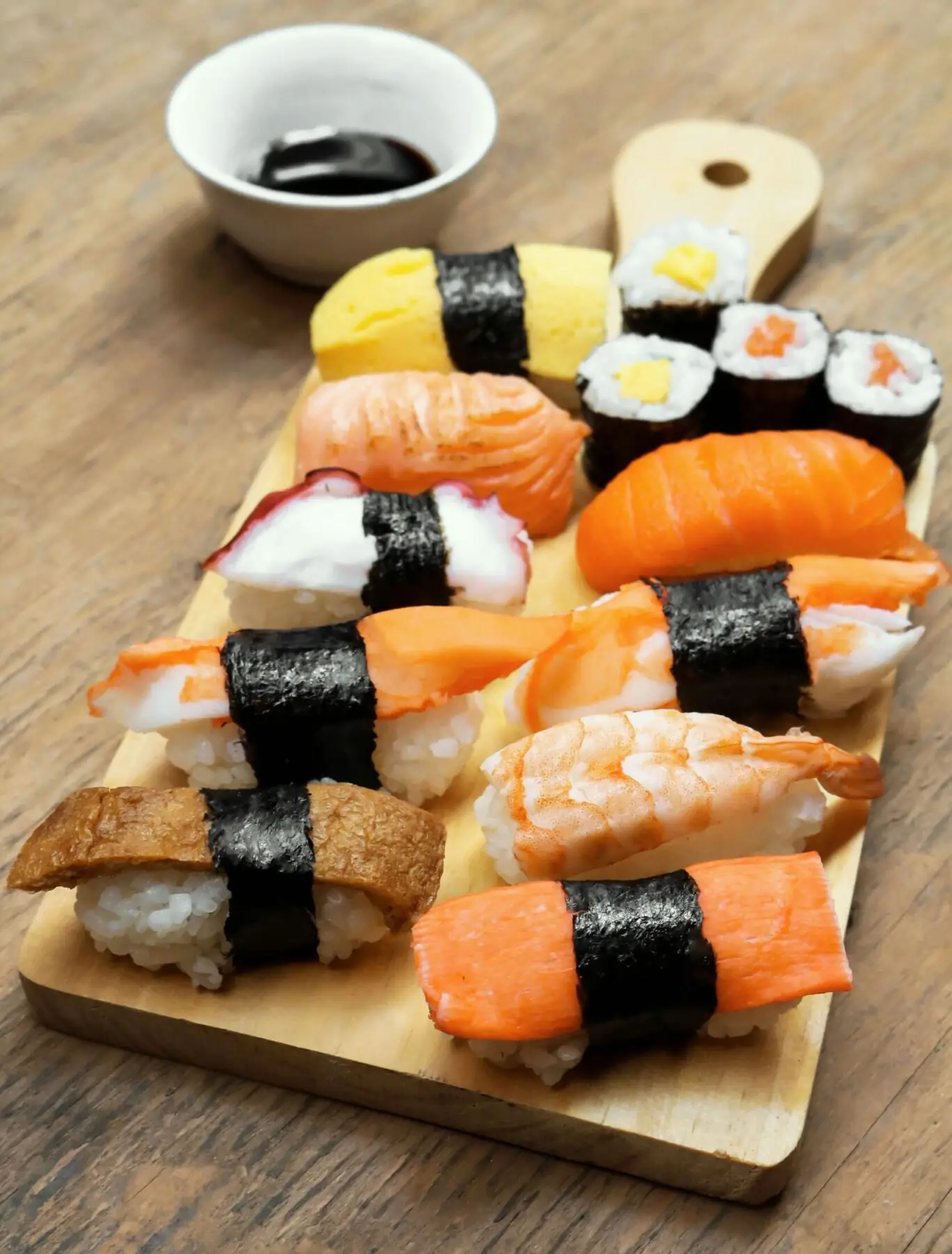
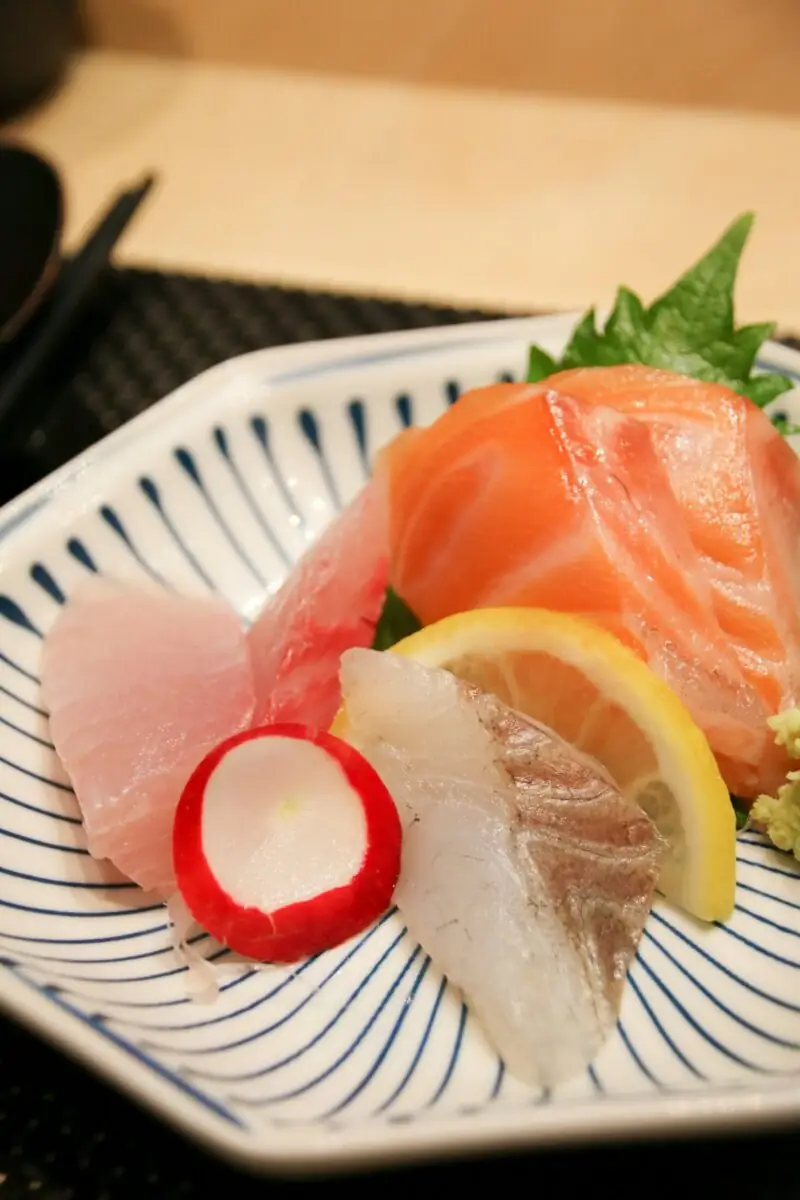
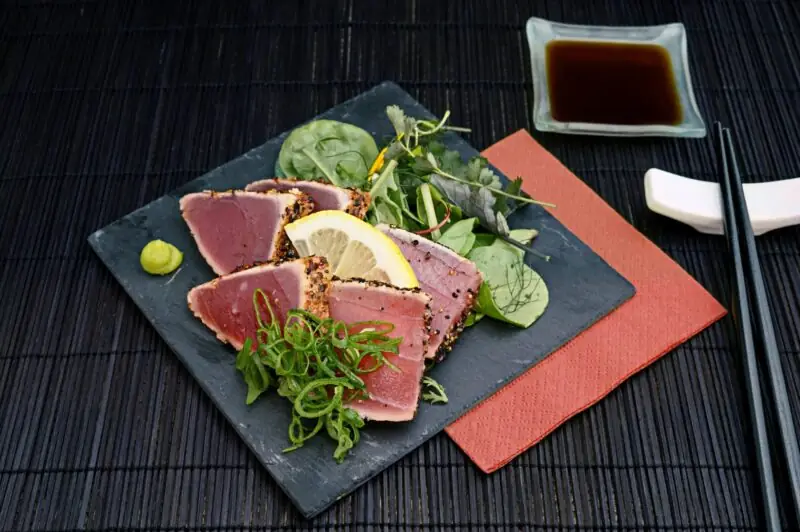
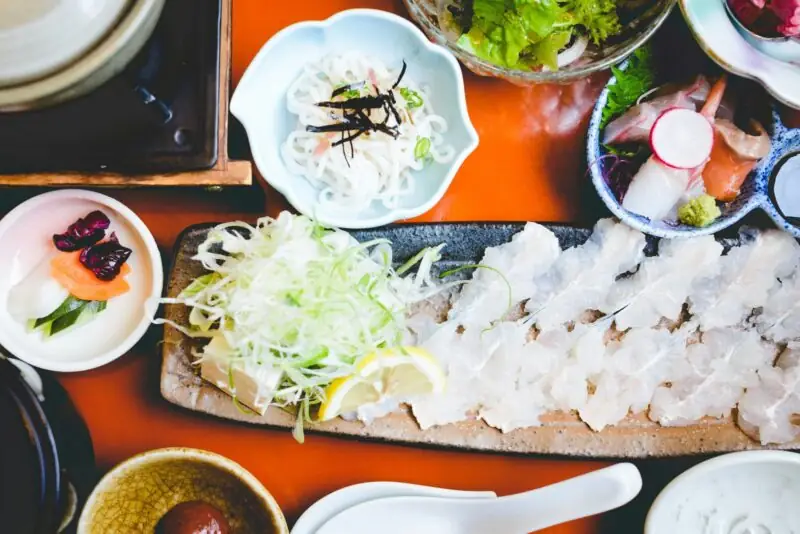
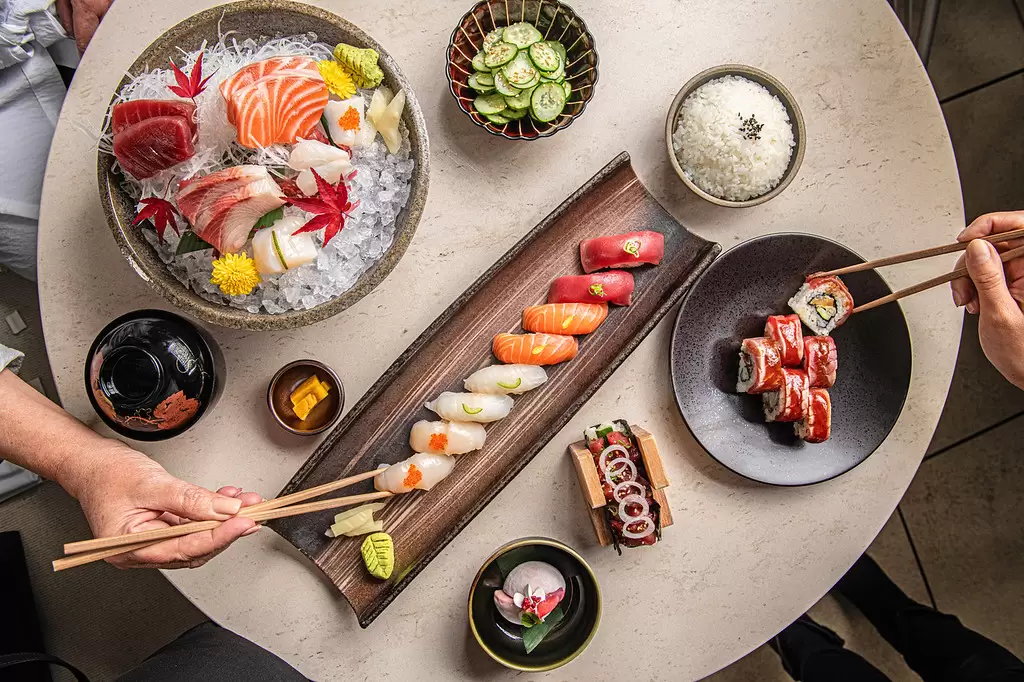
The origins of sashimi date back roughly 700 years to Japan’s Muromachi period. In an era when food preservation and transportation techniques were strictly limited, fresh seafood was an extraordinary luxury, particularly in inland regions. As a result, most fish was preserved through salting, air-drying, or pickling in vinegar.
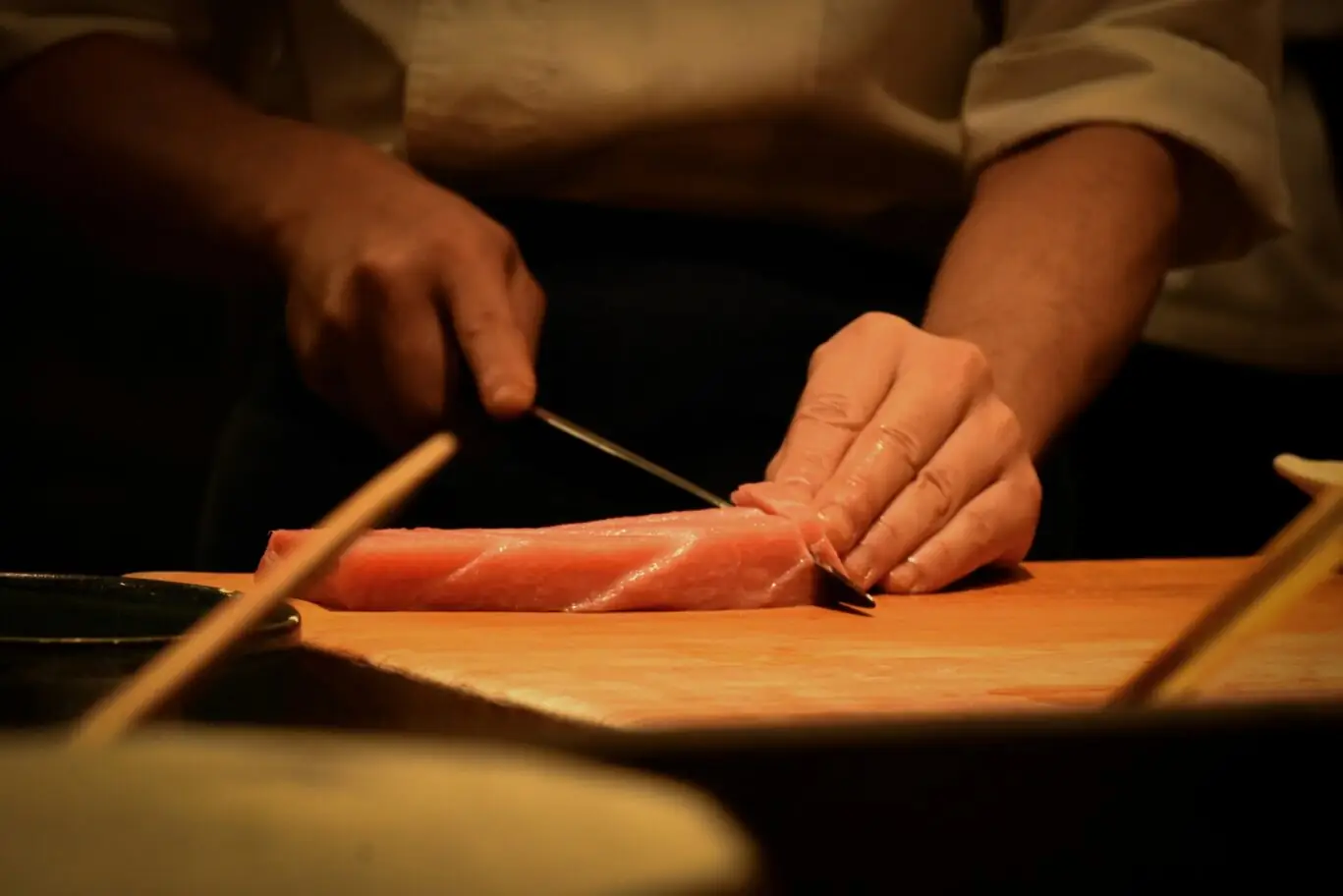
During the Muromachi period, members of the aristocracy and samurai class began consuming raw fish served simply with salt or vinegar. Named sashimi, this style of dining placed supreme emphasis on the chef’s knife craftsmanship.
It was not until the Edo period, around 400 years ago, that sashimi gained widespread popularity. Advances in fishing and transport allowed abundant catches to reach markets in Edo (modern-day Tokyo) swiftly. Sashimi transformed into a delicacy enjoyed by everyday citizens, often served with Japanese mustard (karashi) rather than the wasabi widely favoured today.1