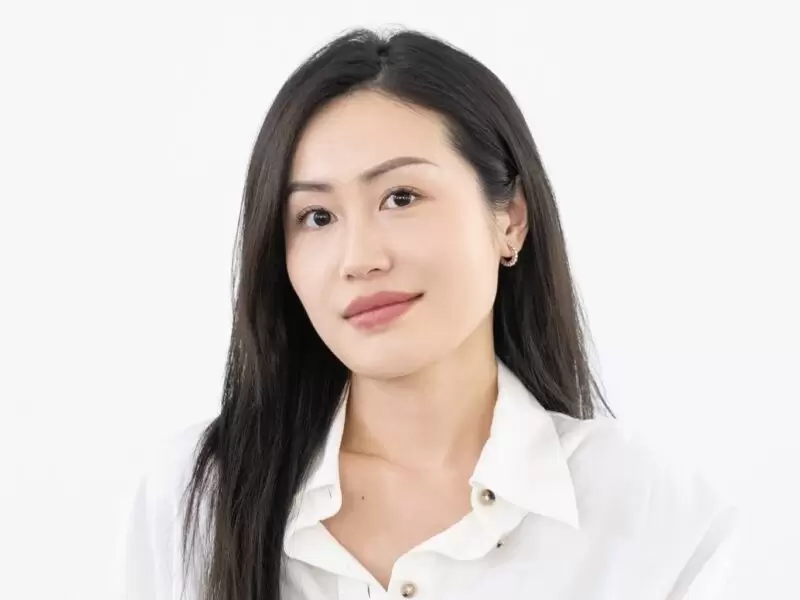
Ailsa Wong
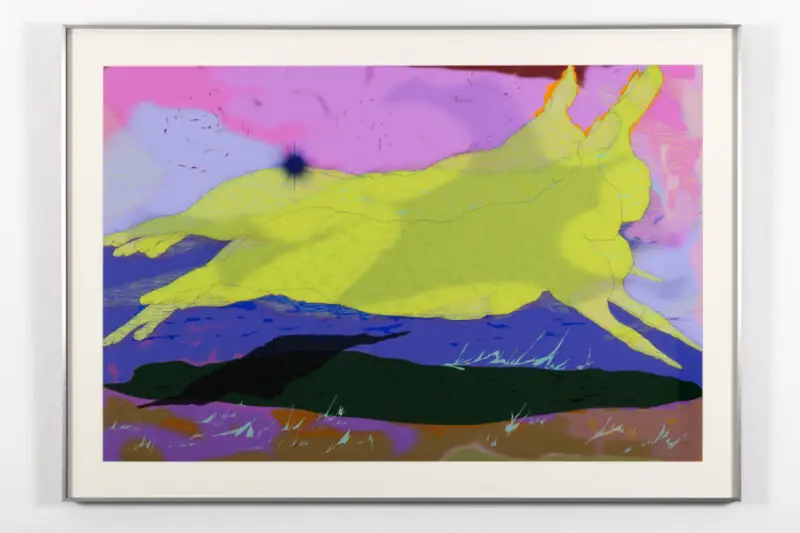
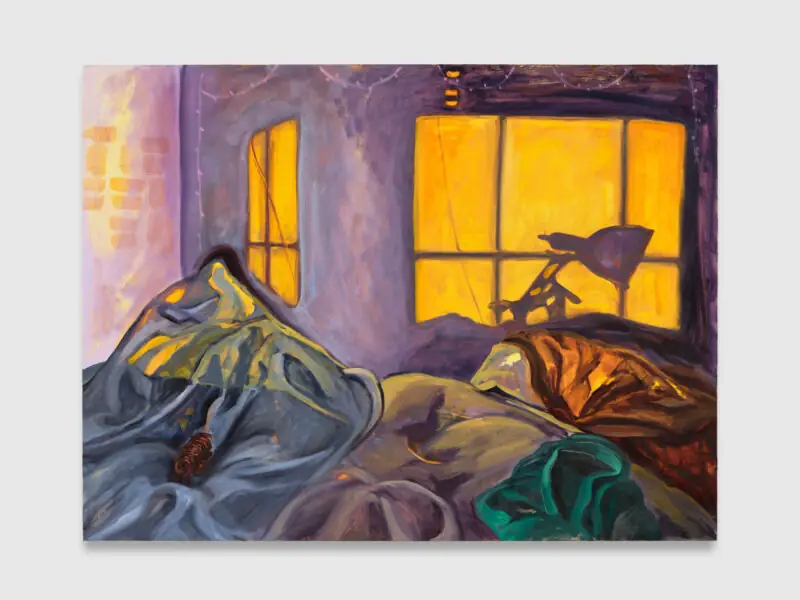
Hopping (2022)
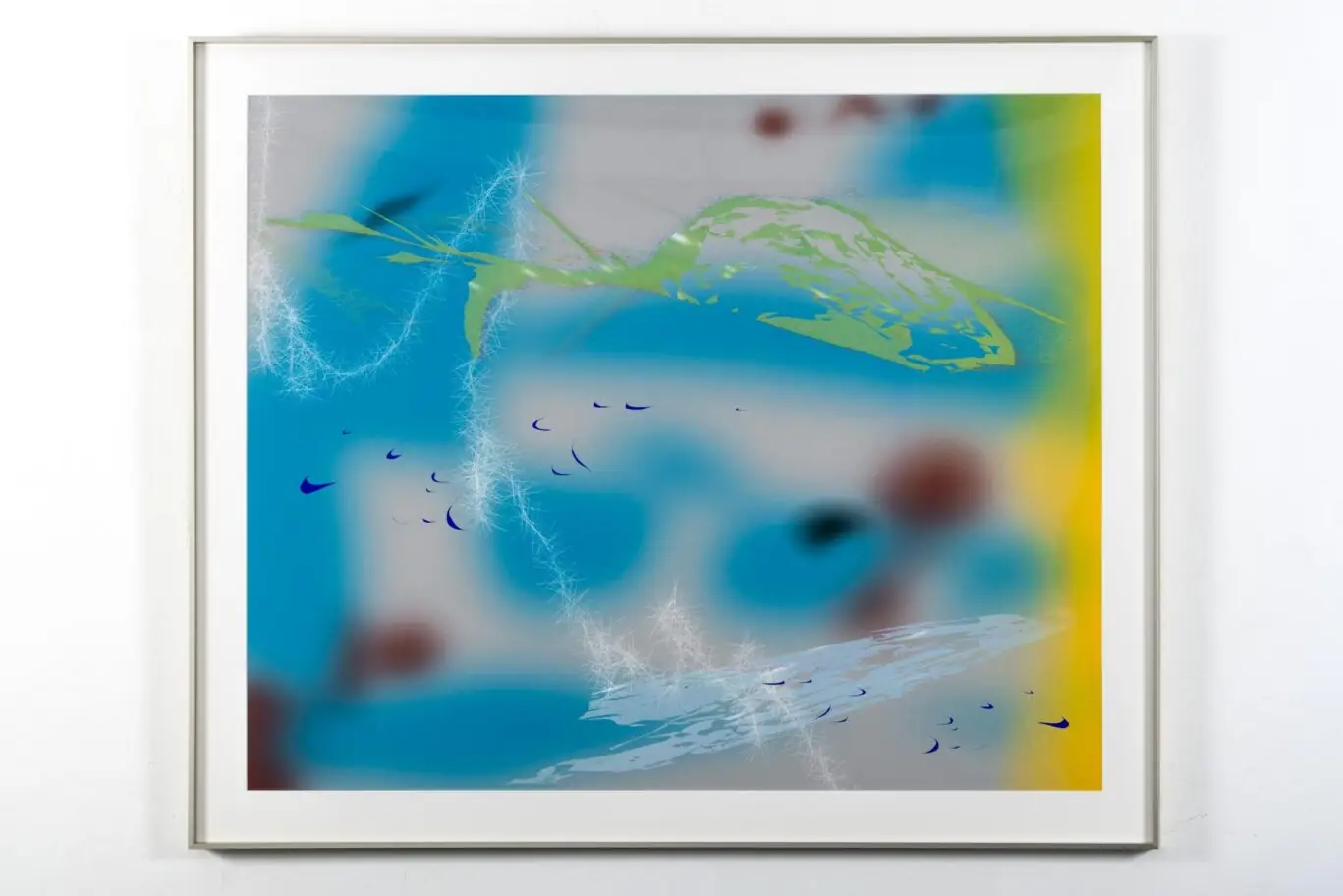
Ailsa Wong’s practice spans across paintings, videos, image- making, games, and installations. Wong explores ways to connect consciousness with primitive emotions to fill the vacuum of belief. Wong’s means of communication draw inspiration from fractured life experiences, wherein meaning is repeatedly dissolved and reestablished.
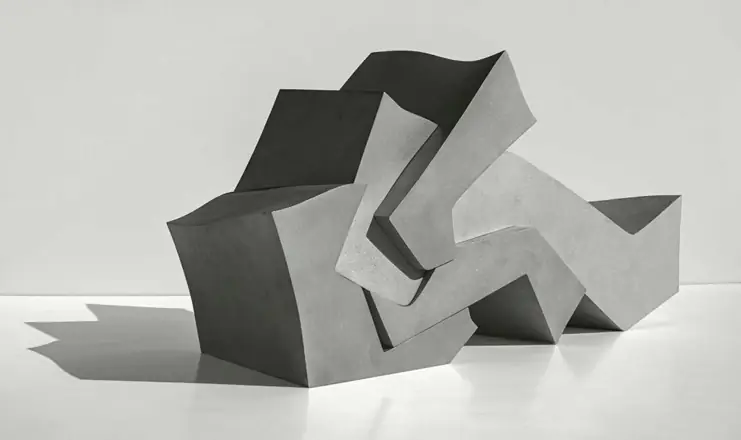
Alonso Odria
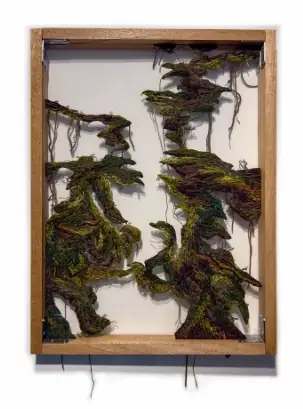
Mist Finder (2025)
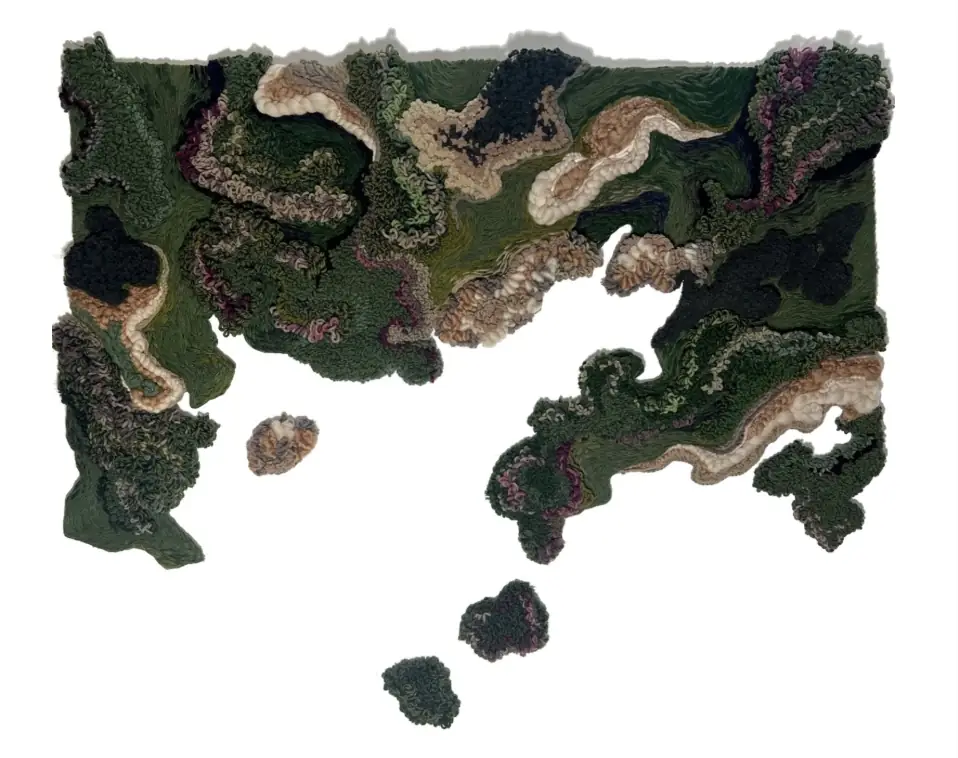
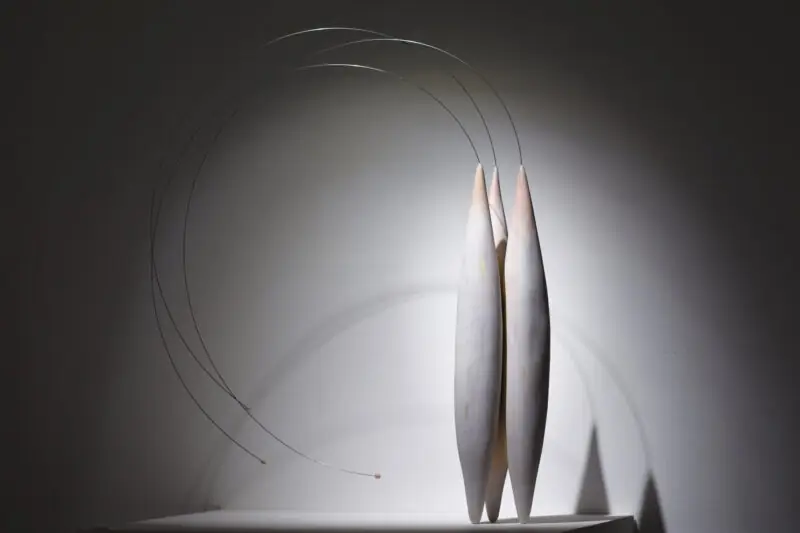
Alonso Odria explores the abstraction of the natural world through the fragmentation of its forms and structures. Drawing inspiration from geological formations and natural environments, the work focuses on the observation of how nature is constructed, from the shifts of tectonic plates to the quiet growth of moss and foliage.
Across sculpture and painting, fragments become the fundamental language of the work. These give way to shapes, which are layered and reassembled to echo the processes through which nature forms and transforms. All this is underpinned by a deep interest in the history and cultural perspectives from both my home country and my lived experiences in East Asia. As a result, my artwork is driven by the intersection of cultural heritage and the underlying forces that govern the natural world.
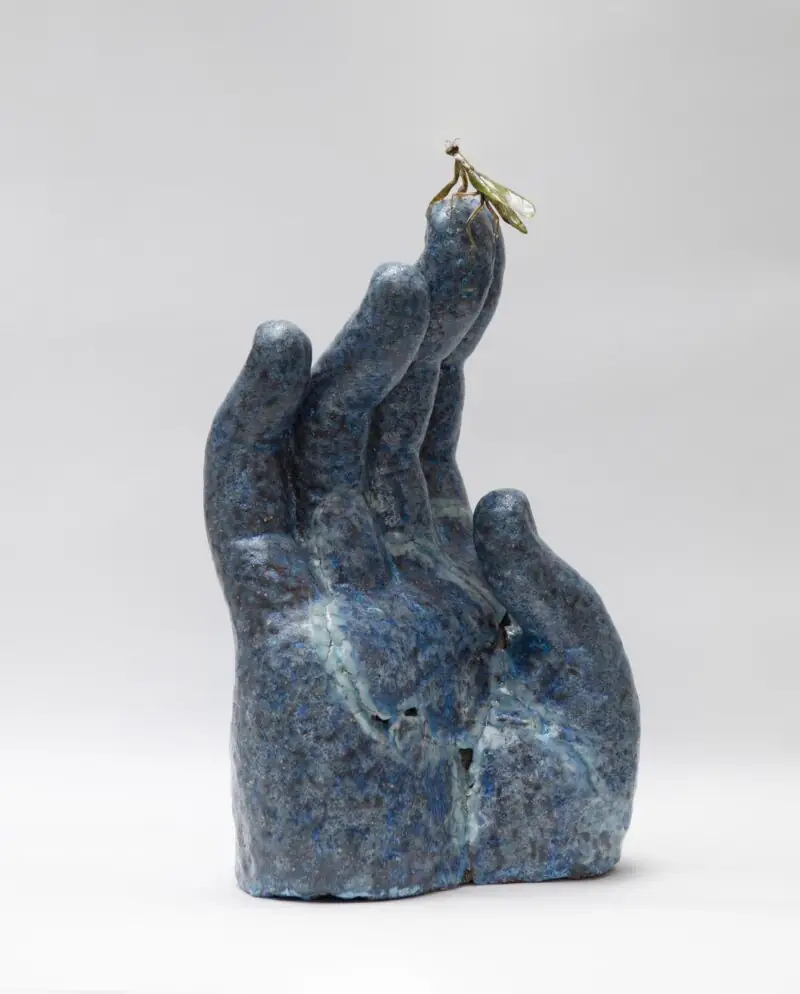
Anastasia Fabritskaya
Lama’s Hand (2024)
Born in Voronezh, Russia, Anastasia Fabritskaya is a graduate of the Sculpture Faculty at the Surikov Institute and a member of the Moscow Union of Artists. She has participated in exhibitions across Russia and internationally, including in St. Petersburg, Voronezh, Kaliningrad, Moscow, and Hong Kong.
Working in bronze, plaster, wood, and ceramics, Fabritskaya explores the beauty of the human form as a reflection of inner experience. Her sculptures express a personal journey — one shaped by self-inquiry, a search for spiritual connection, and a deep bond with the natural world.
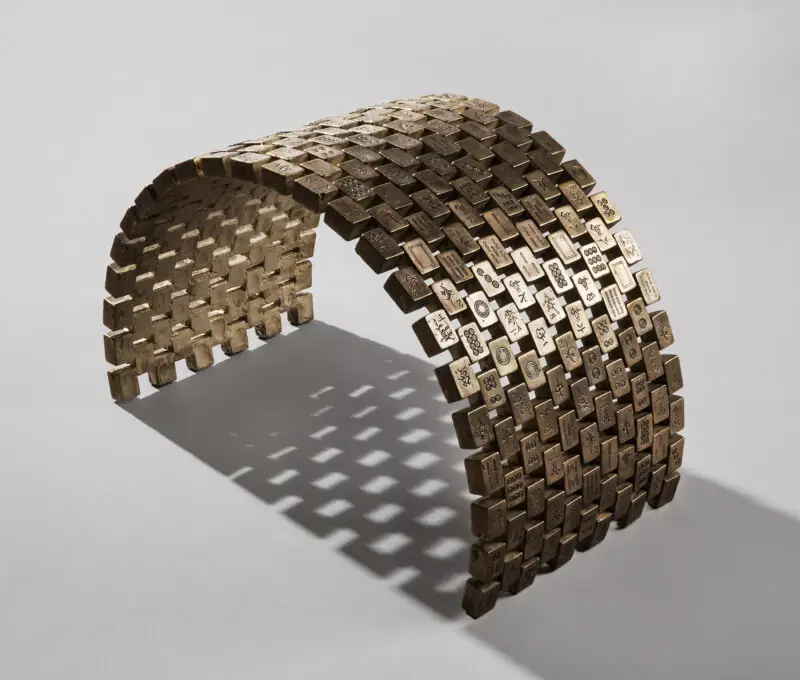
Anton Poon
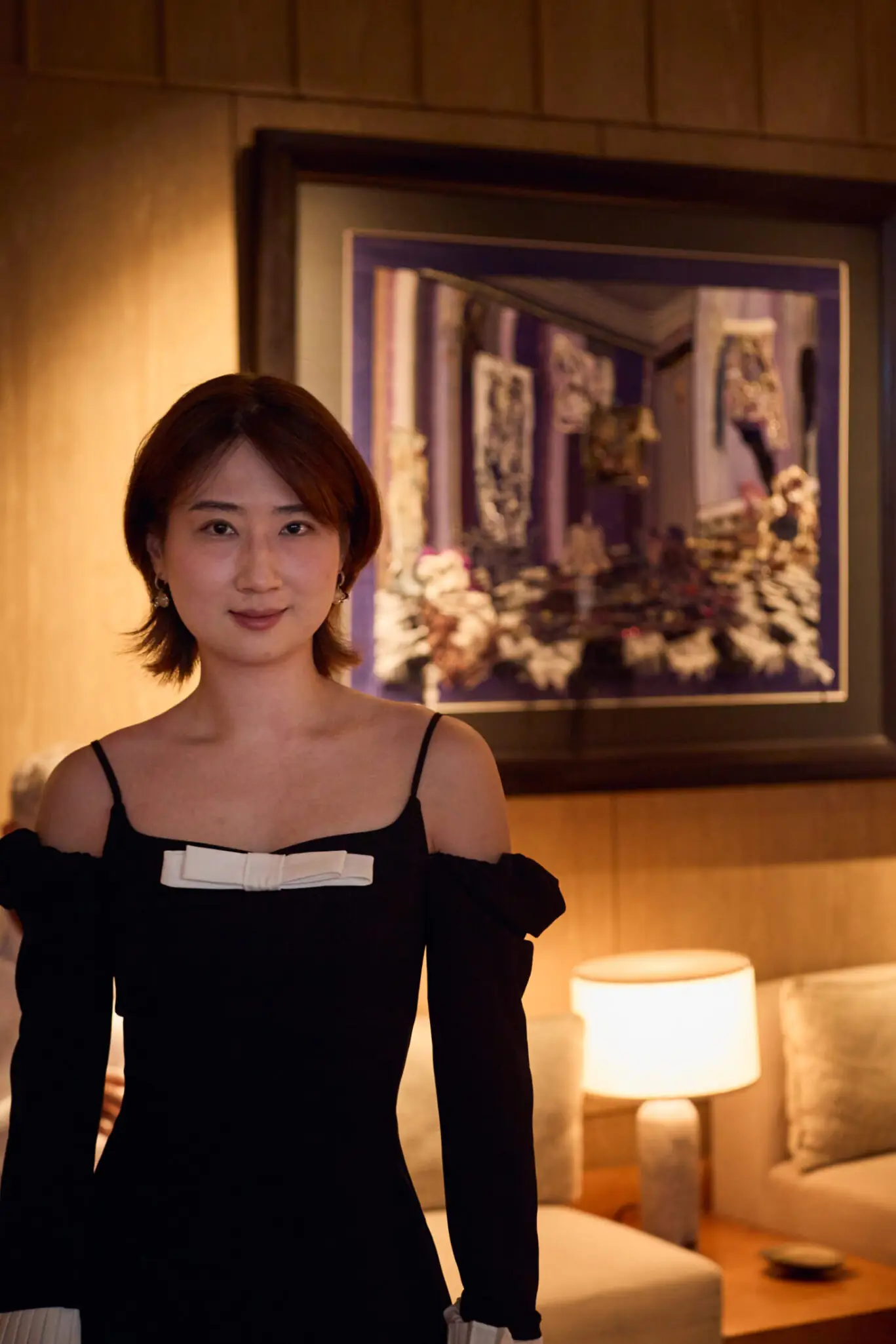
Mahjong bridge (2014)
Born in Hong Kong, Anton Poon is a sculptor who delves into themes of cultural transition and personal identity. After relocating to Australia at the age of 13, he cultivated an artistic practice that captures the intricacies of belonging to two cultures.
Poon frequently employs pencil shavings, bridges, tunnels, and Rubik’s Cubes as metaphors for passage and the layers of human discovery. He utilises a variety of materials, including aluminium, bronze, and Corten steel, chosen for their capacity to weather and transform, reflecting the fluidity of identity and the journey it entails.
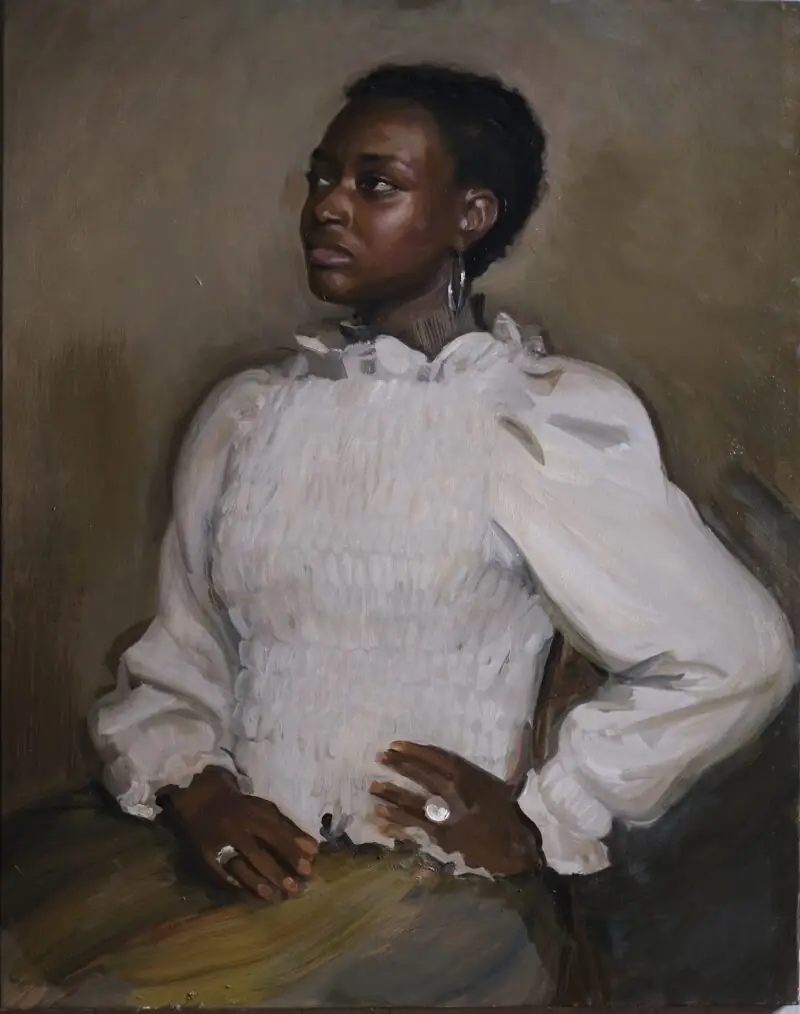
Brendan Fitzpatrick
In Silver
Brendan Fitzpatrick is an award-winning figurative artist from both London and Hong Kong. He attended both Central Saint Martins and the Royal Drawing School before apprenticing at the Charles H. Cecil Studios in Florence, where he subsequently began teaching at the request of the atelier.
He is inspired by the people that he has the privilege of meeting and honour those bonds in paint. By working as much as possible from direct observation he has a front row seat to the conversations both real and imagined with his figurative subjects. Paint allows him to direct the scene as he sees fit, by warping their perceived reality, by using brushstrokes to lend strength, or by the subtle glow of a pigmented patina only layers of glazing can provide. Organic human-made craft and context are vital to him, society is built on top of it. It is all too easy to become numb to the millions of individuals around us and so he paints the tensions that he observes, marrying his training in painting with ever-unprecedented times, akin to the order and the chaos of Hong Kong.
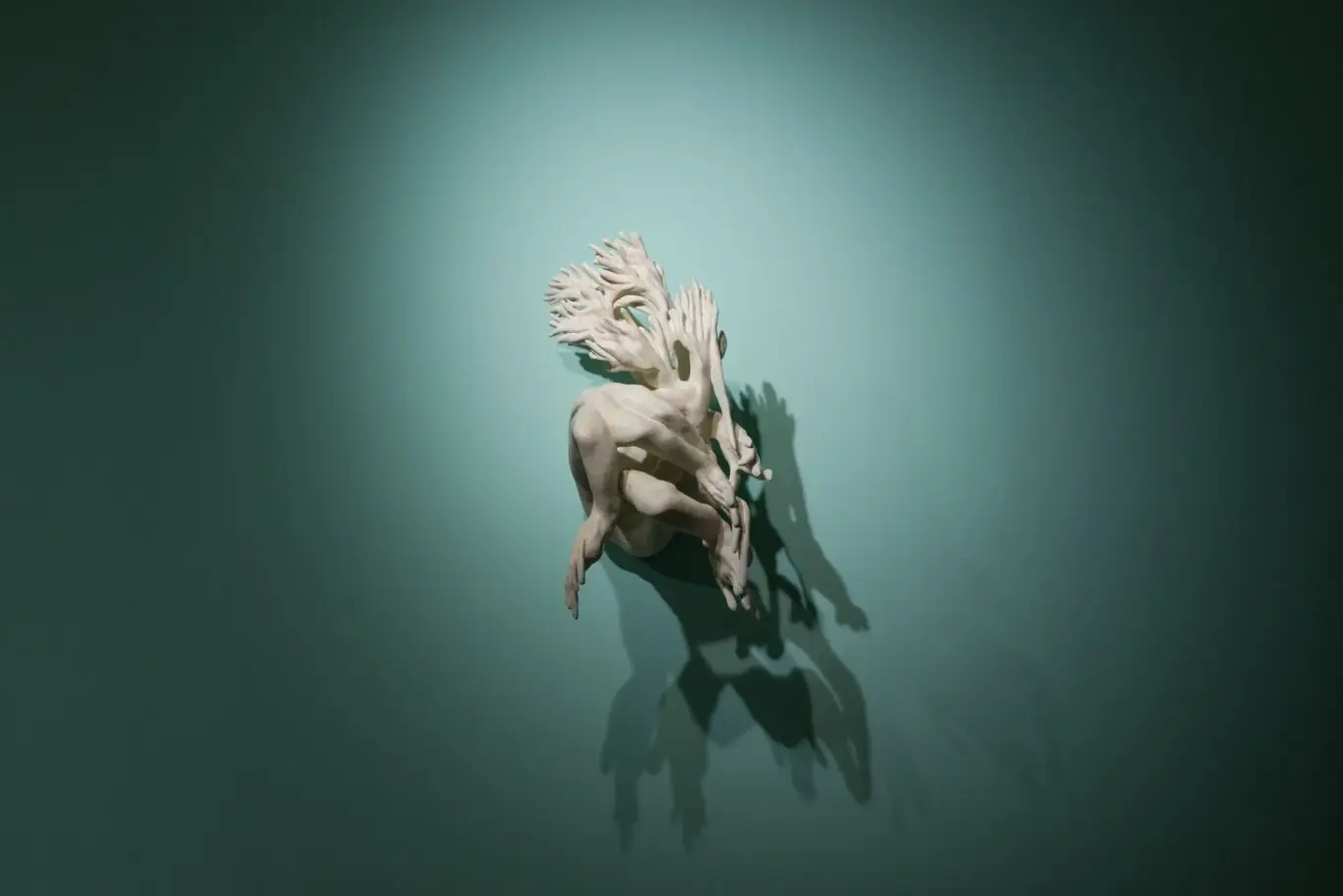
Kami (Camille Benoit)
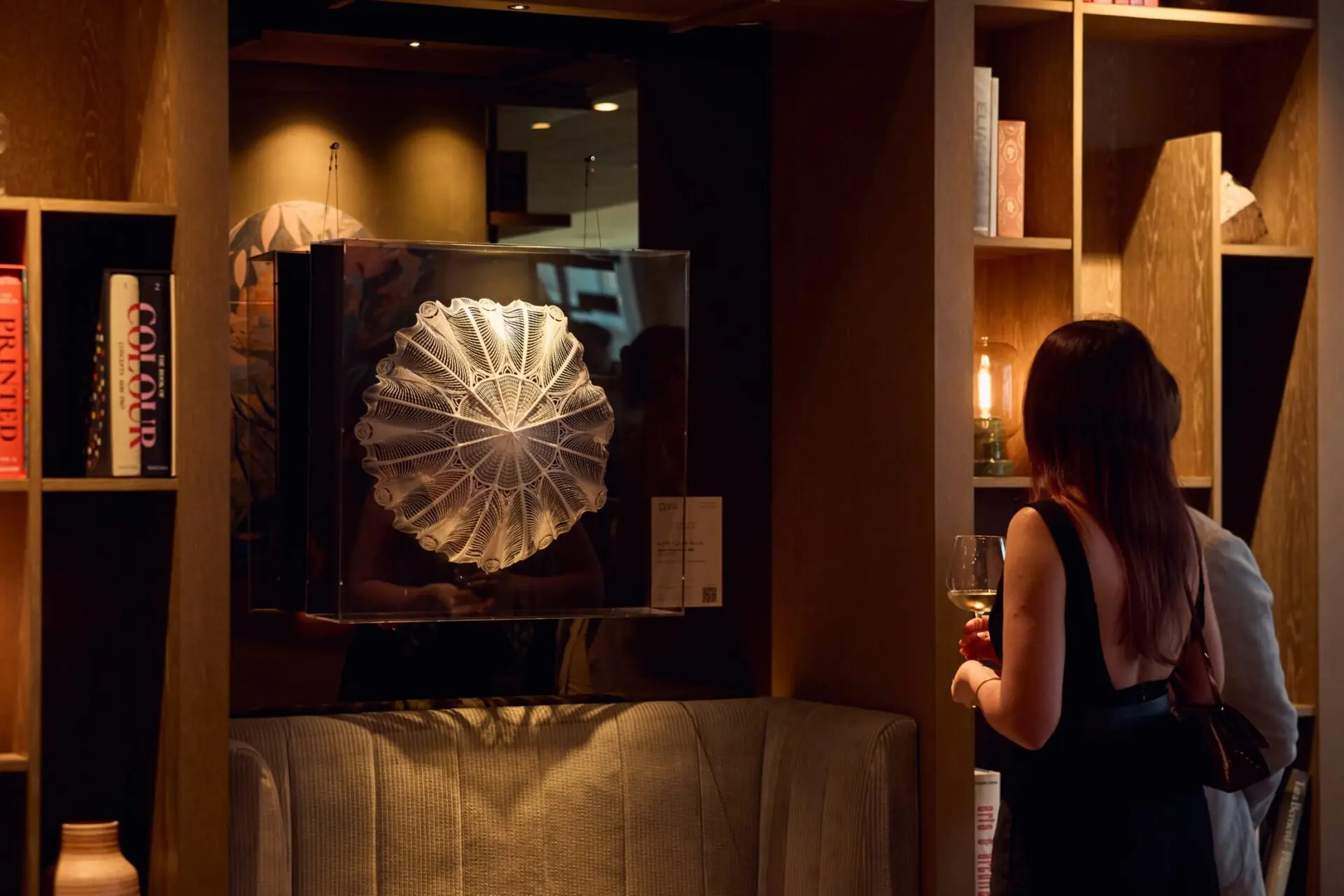
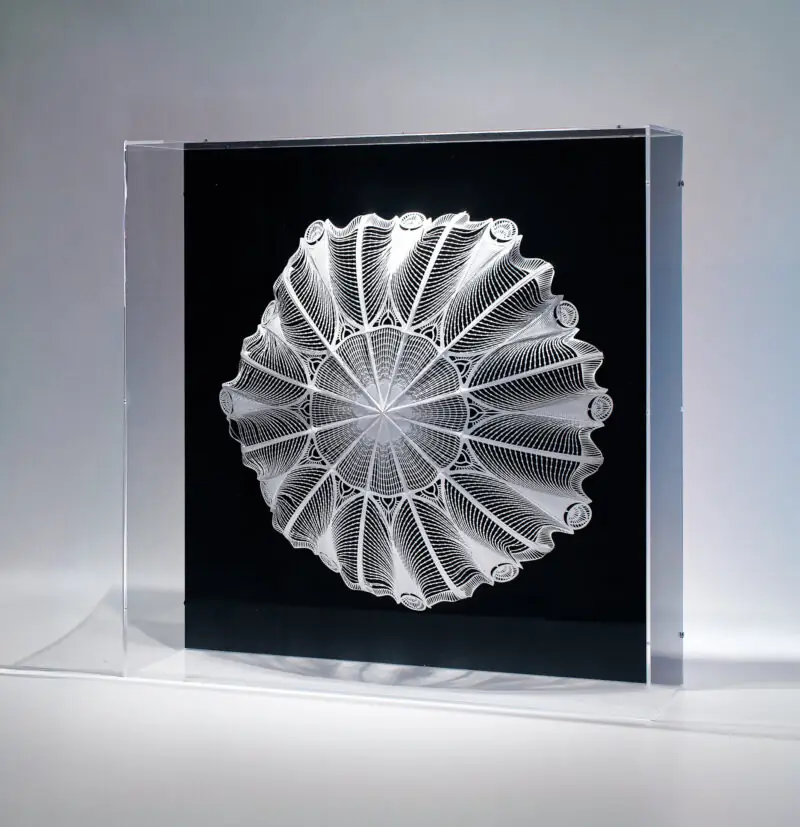
Medusa From Above (2025)
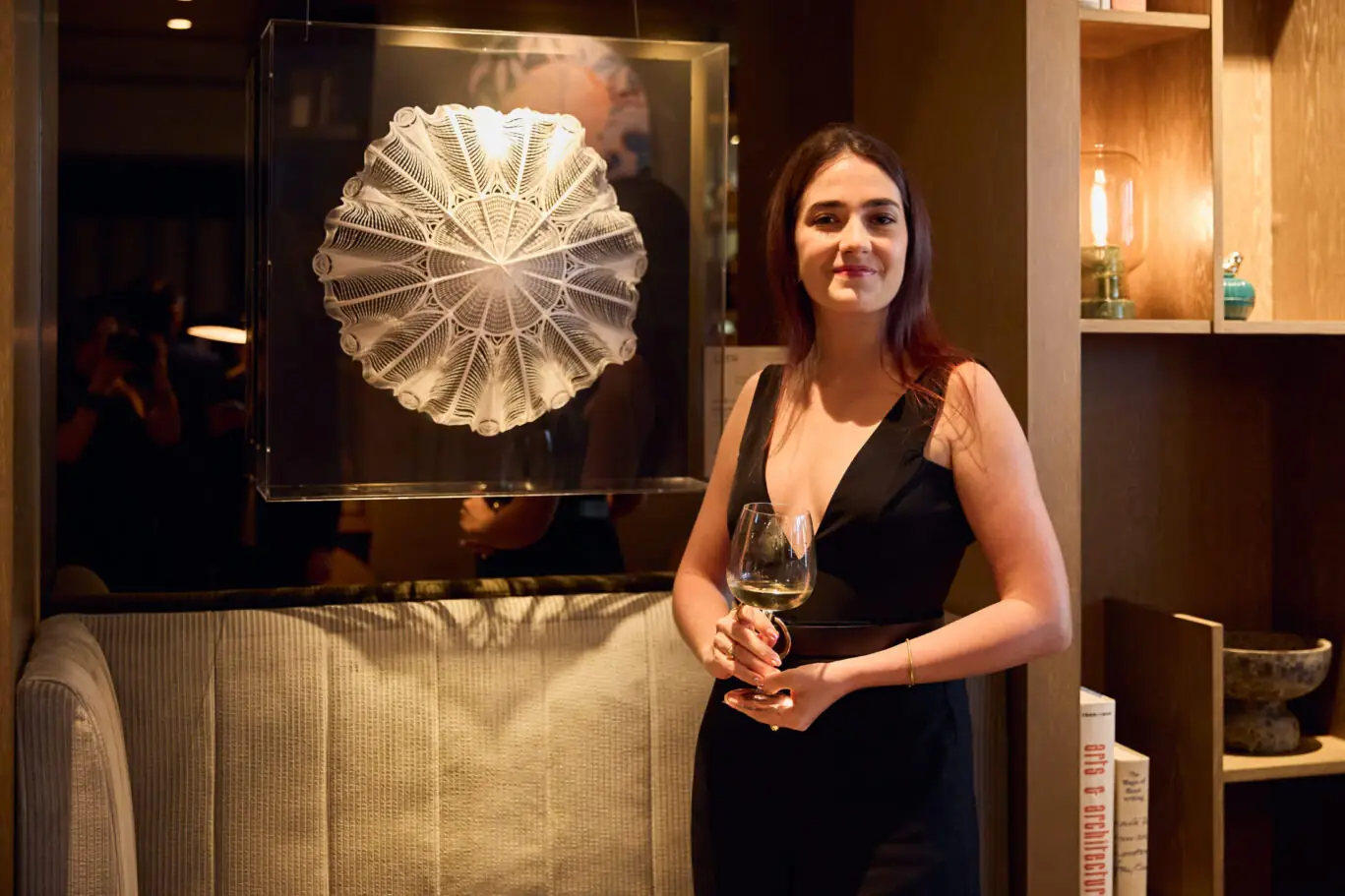
Kami, also known as Camille Benoit, is a French artist and art director based in Hong Kong. Her work centres on the dichotomy of digital design versus manual manipulation; a contrast she amplifies using paper as a vehicle. Her passion for paper art was ignited during her studies for an MA in Art Direction at Penninghen Art School in Paris.
This sculpture creatively captures the ethereal beauty of a jellyfish viewed from above, crafted from white pearlescent paper that refracts light in captivating ways. The artist designed the intricate shapes and meticulously formed and assembled the hundreds of pieces by hand.
Chengxuan Xie
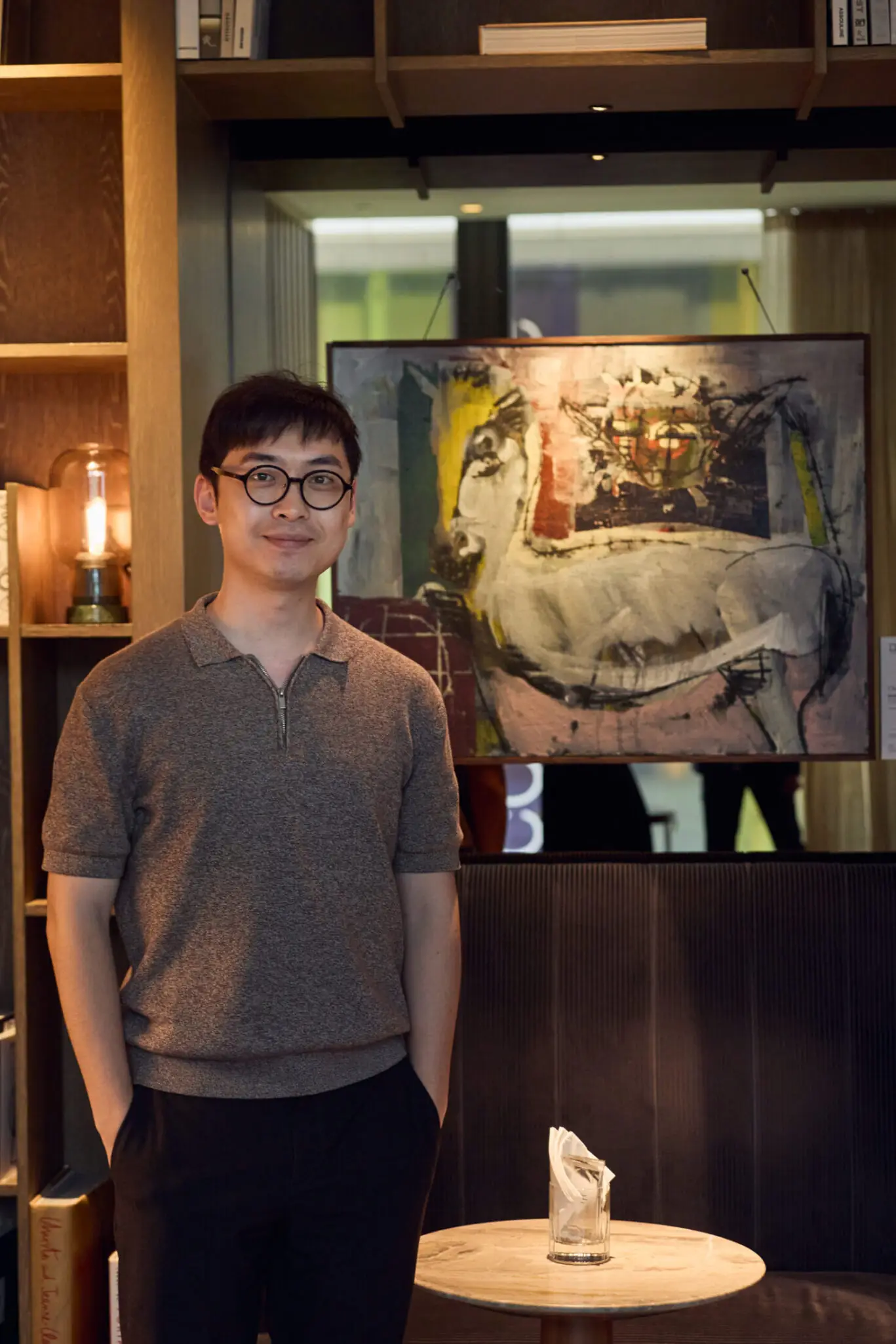
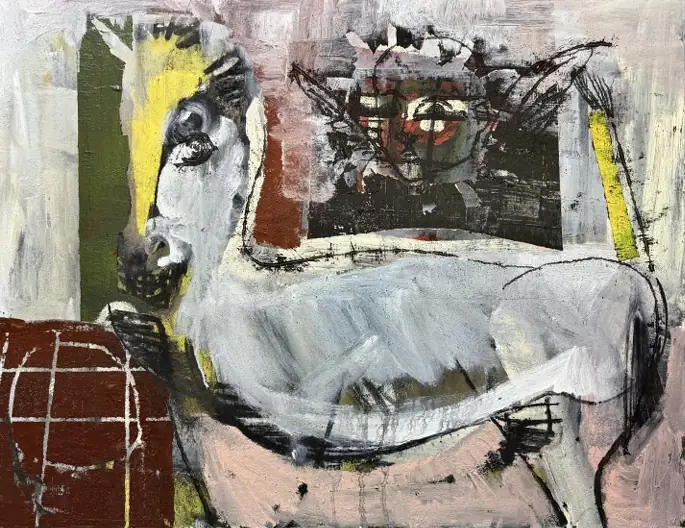
Donkey: Never see a flying angel (2026)
Xie Chengxuan, born in Guangzhou, graduated from the Department of Fine Arts at the Chinese University of Hong Kong in 2020 and completed an MA in Painting at the Royal College of Art, London, in 2023.
He works primarily in acrylic and mixed media on canvases and papers. His practice is grounded in deconstruction: objects are reduced to their elementary visual units—points, lines, planes, colour blocks, textures—then reassembled. Because each viewer’s cultural and personal lexicon differs, the resulting images resist a single reading. The independent elements continue to interact in the finished work, keeping the surface in unresolved dialogue.
Enna Cheung
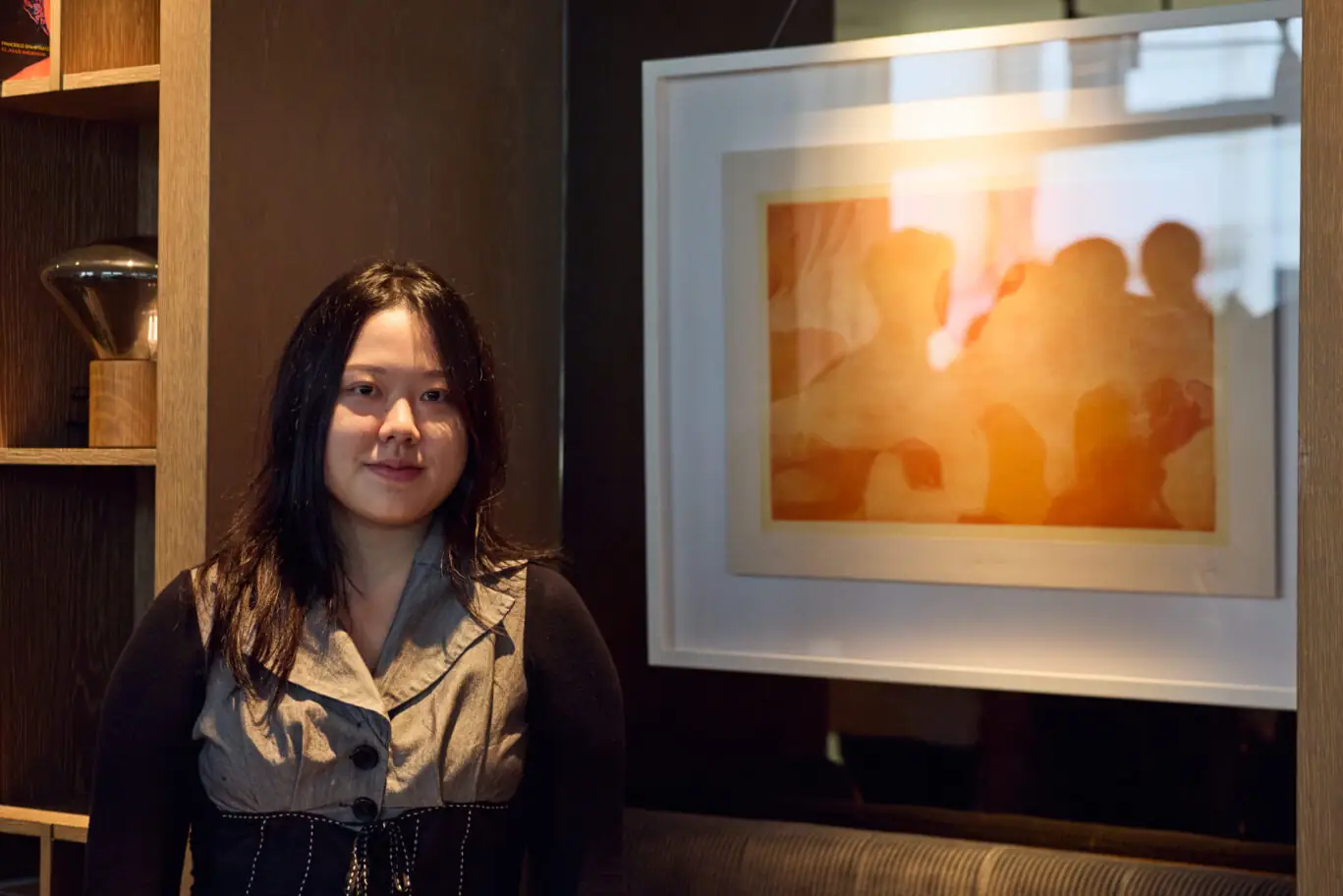
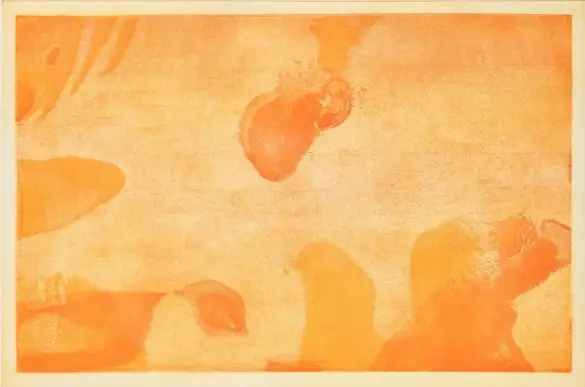
Sunlit Lovers 曦 (2026)
Born in Hong Kong, Enna Cheung is an artist specialising in printmaking. She explores skin as a vessel of memory, translating intimate yet fleeting human connection into permanent imprints, from skin to plate then paper, with a gravity on building a safe space for genuine connections.
Sunlit Lovers holds a special place in her heart because it embodies the essence of affection, connection, and the hospitality she associates with luxury hotels like the Hari. Created specifically for this open call, the work captures the intimacy of a pair of lovers in an embrace, their skin imprints etched eternally onto copper plates, through a softground intaglio technique she invented after her Solo exhibition, collaborated with the Print Contemporary, Hong Kong in
2025.
Jennifer Yue Yuen Yu
The Lightness of Water
Jennifer Yue Yuen Yu is an interdisciplinary artist and independent curator whose practice explores the poetics of bodies in transition ecologically, culturally, and personally. Her work is rooted in the heterotopic condition of water, from wells to rivers, and to oceans. Through migration narratives, material memory, and biological research, she investigates how identities emerge, dissolve, and adapt within unstable environments.
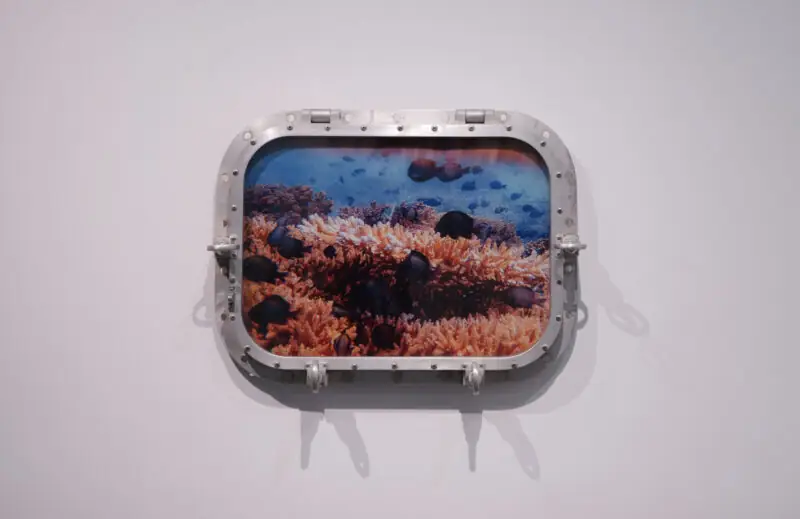
Red light is the first to disappear underwater, and what once glows with vivid warmth becomes muted, swallowed by depth. On
land, a similar fading occurs: when red pigments are exposed to sunlight for too long, they lose their strength and gradually turn blue.
In this work, she juxtaposes these two realities—underwater perception and solar exposure—by replicating a seabed of coral reefs. She intentionally render the corals in their true orange tones, then print the image as a poster resembling a tourist photo backdrop. Throughout the exposure, the print is left under direct sunlight, its colours slowly bleaching away.
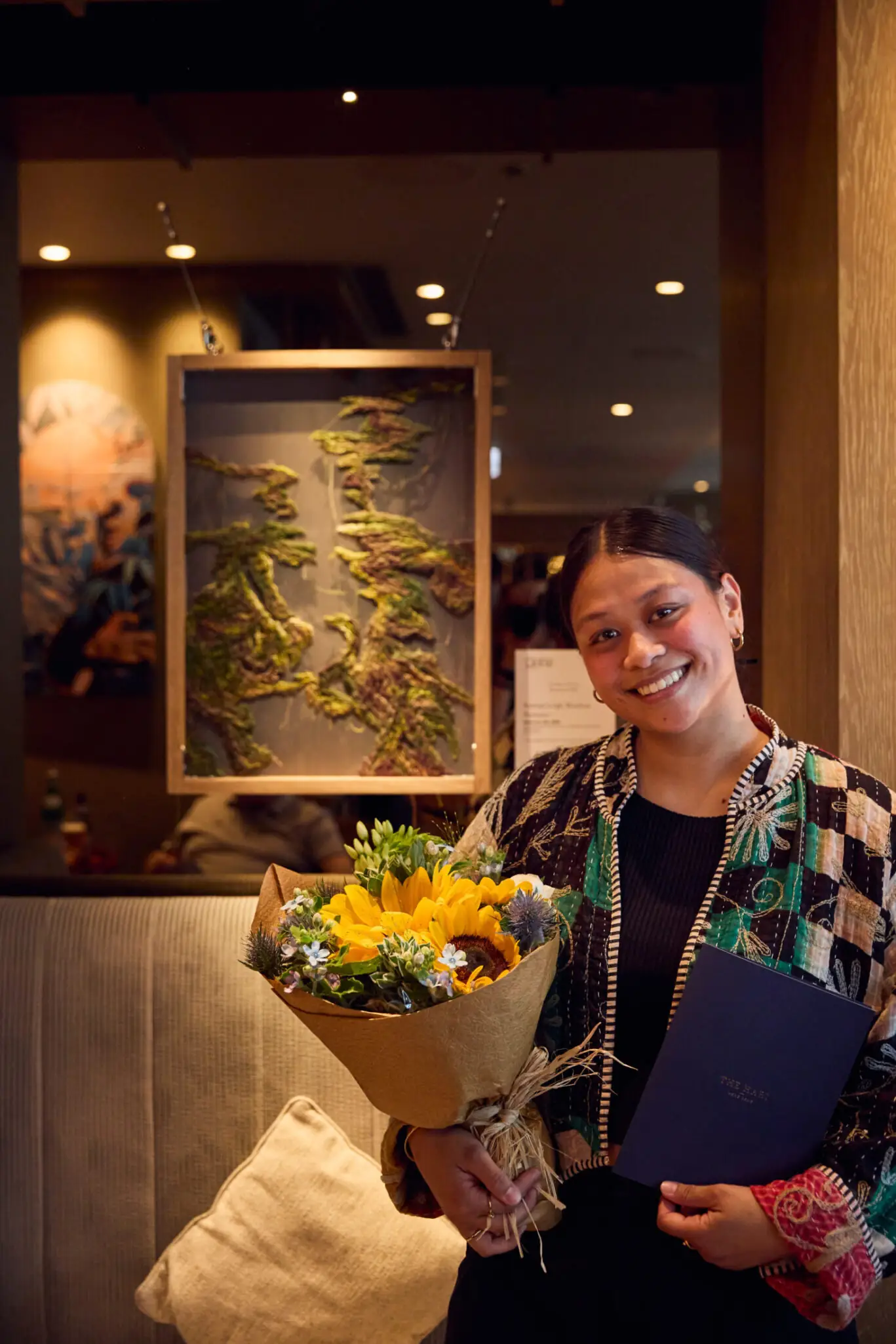
Katrina Leigh Mendoza Raimann
Head nor Tail (2022)
Katrina Leigh Mendoza Raimann is a Filipino interdisciplinary artist based out of Hong Kong and graduated BA Fine Art at Goldsmiths, University of London. Working across textiles, installation, and performance, she tells stories of intimacy, relationships, and the body.
This pieces shows two sides of the coin. The “front” side depicts the uniformed, ‘clean’ embroidery while the “back” shows the raw messy intertwined threads. I wanted to show the beauty in both sides of the work. The there is beauty in the hidden messy sides.
The co-existing messiness and uniformed lines are an explosion of emotions threaded into the flow of movement. There is also a tension created from the physical material objects and the emotions applied to it. The carefully intertwined and knotted threads are held together in a frozen image of fading memories and intangible futures, endlessly changing but frozen still.
Kiefer Cheung
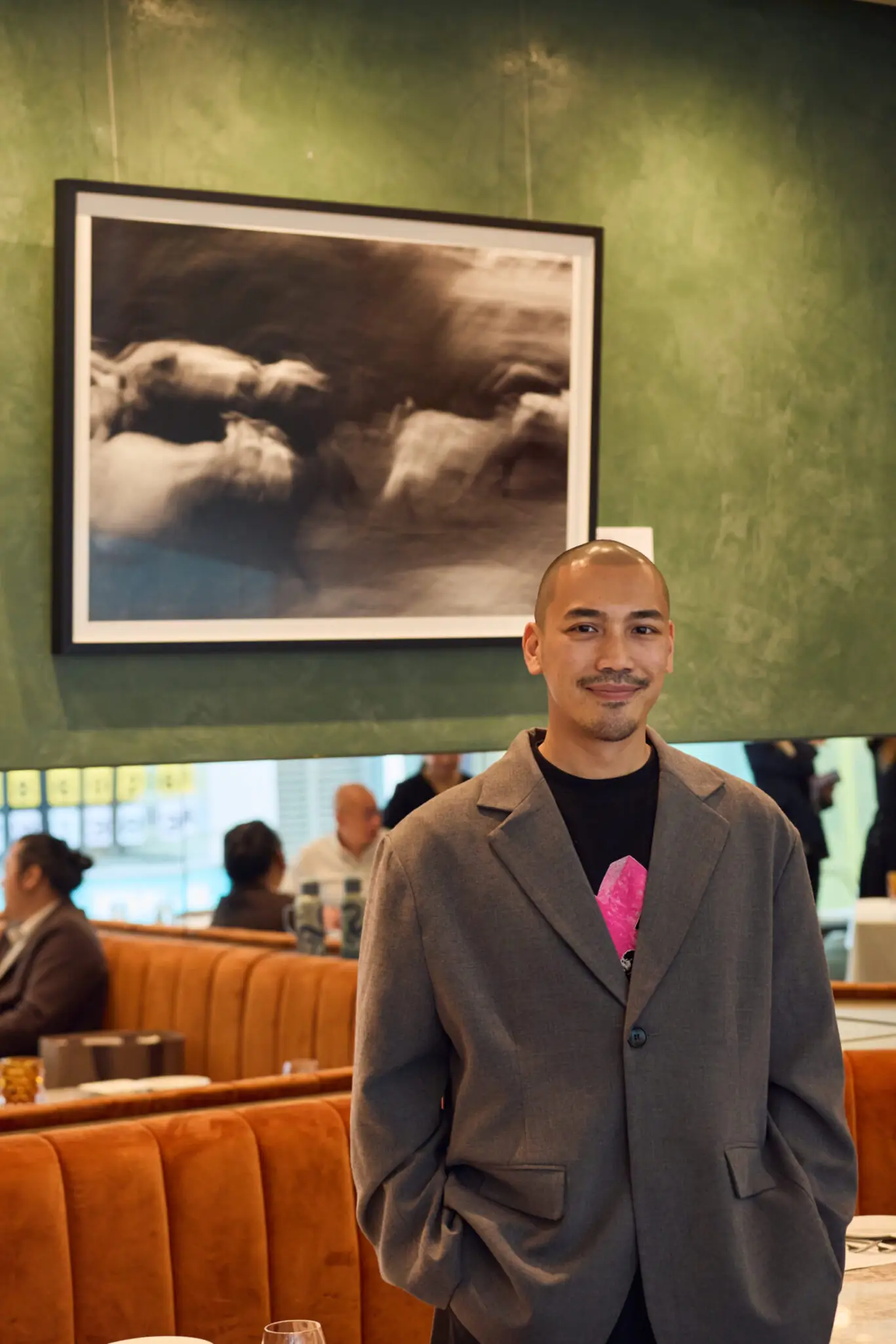
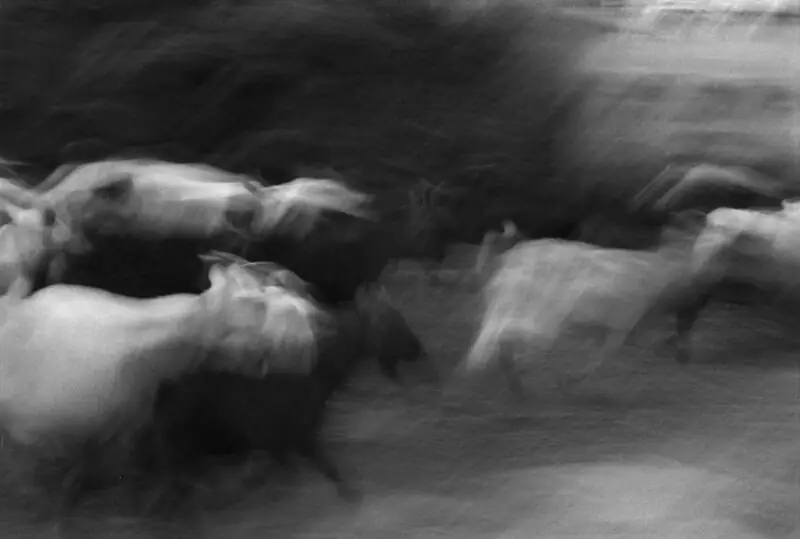
Flow of Life (2025)
Kiefer Cheung is a Hong Kong–based actor, director, and self-taught analogue photographer. Drawing from his deep passion for cinema and performance art, he brings a unique cinematic and theatrical sensibility to still imagery.
Working primarily with 35mm and medium-format film, Kiefer captures candid snapshots of everyday life, revealing the subtle, often overlooked human imprints in ordinary moments. His approach blends the spontaneity of street photography with experimental, rule-breaking techniques — unconventional framing, lighting, and timing — to create images that feel like quiet film stills or performative gestures.
He chooses black-and-white film to strip away the distractions of colour, revealing existence in its raw, essential form. His lens focuses not on scenery, but on shepherd Yeung and his flock. Here, the sheep transcend their pastoral setting, becoming fluid symbols of life, rendered in rich grey gradients.
Kitty Ng
15 West, 21/02/2022, 17:16 – 21/03/2022, 18:50
Kitty Ng is a painter born and raised in Hong Kong. Her practice uses painting as an investigation into temporality, desire, and memory. She is deeply interested in how humour, anxiety, irony, yearning, joy, and resistance emerges in the interplay and encounter of these structures, and plays with a visual language rooted in a reinterpretation of colour, repetition of motifs / colours /gestures, the traditional Chinese technique of 留⽩(liú bái), and a blending of intentionality and automatism.
Lily Cheung
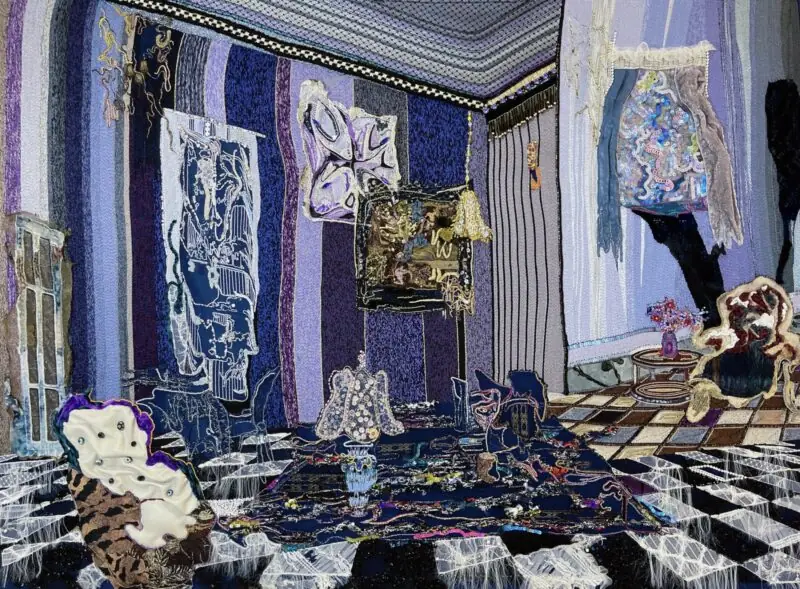
Chartres Garden
Cheung’s work focusses on painting and embroidery to explore the intricate dynamics between individuals and society. Hey experience of living and learning within varied and constantly shifting cultural landscapes has deeply influenced the artist’s creative approach, fostering an openness to experimentation and a drive to explore the boundaries of her chosen materials.
Cheung’s new series investigates the unsettled nature of modern existence through the thematic lenses of glitz reflexivity and opacity. The works capture the inherent conflict individuals face as they navigate along the complex and ever-changing social and economic landscape. Trivial hints of feminine traces spread across the body of works add a layer of intimate, human detail to the broader social commentary, showcasing the dynamism of the contemporary state and the inevitable disorientation of fragmented identity.
Lo Lai Lai Natalie
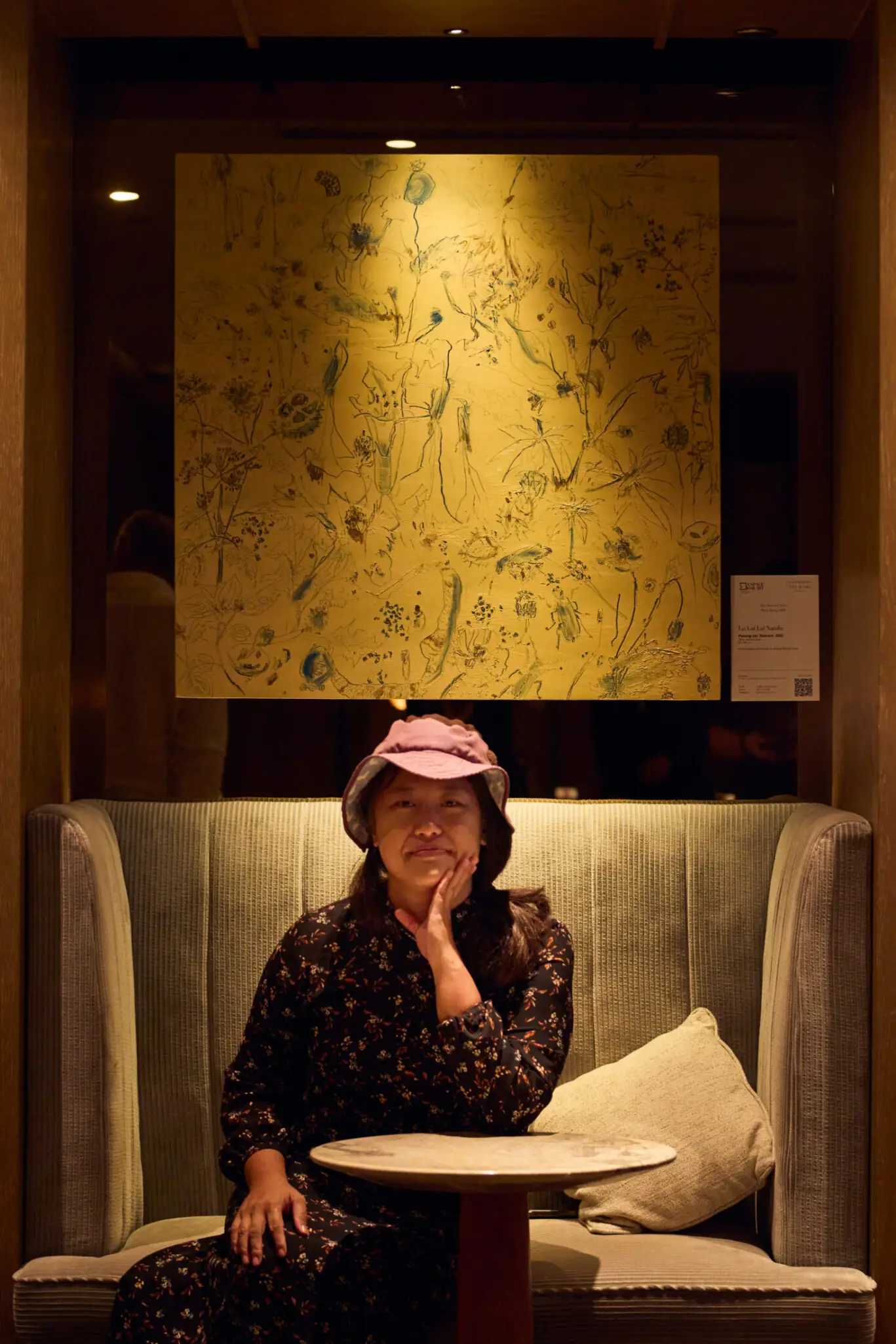
Pasting Up: Toxicant (2023)
Lo Lai Lai Natalie is a former travel journalist. She finds her interests in food, farming, fermentation, surveillance, and meditation. She has a farming practice, using photography, video and installation as a means to interact with nature.
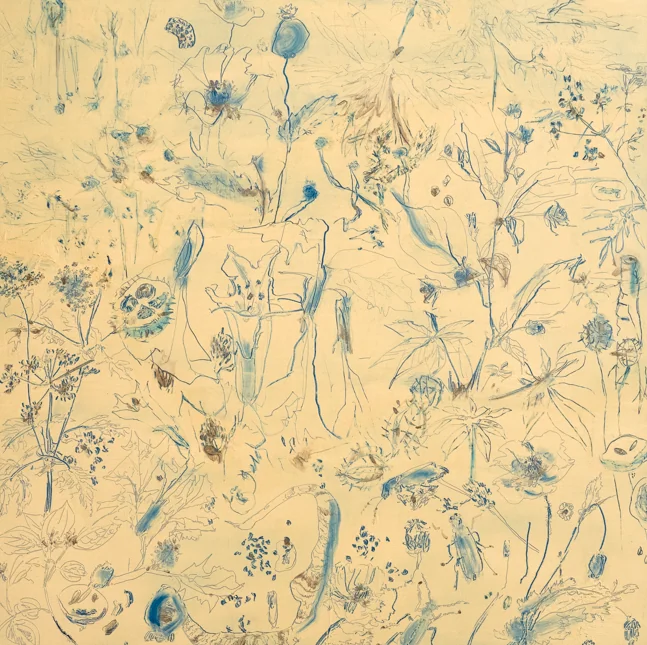
“Pasting Up: Toxicant” inhabits the ornamental language of wallpaper while exposing what lurks beneath its decorative surface. Drawing from botanical and zoological toxins, the work maps poisonous organisms— plants, fungi, insects—with the meticulous detail of natural history illustration, rendered in oil on wooden panel. The idea of placing toxic species onto a “wallpaper” ground arose when the artist encountered historical accounts of arsenic‑laden green wallpapers. Yet where wallpaper promises domestic comfort and beauty, this piece quietly reveals interdependence rooted in danger: the chemical intimacies between predator and prey, toxin and survival. By mimicking decorative aesthetics, the work asks viewers to reconsider the hidden vulnerabilities of nature itself, where elegance and lethality coexist, and beauty harbours complex, sometimes violent entanglements.
Man Mei To
When the Center Point is Lost (2021)
Man Mei To lives and works in Hong Kong and London. Her artworks explore urban vistas and life by observing the intimacy of the body. Her aim is to raise awareness of the existence of all kinds of beings, as well as the connections between their fragility and silence by cloning, reconstructing or quantifying elements found in everyday life. This close attention to the micro-level of daily living allows her work to scale outward, tracing personal history in parallel with social development, observing human mobility alongside land transformation and the disorienting nature of labour. These themes inform her ongoing exploration of fluidity and tension in artmaking, particularly through the conceptual lens of “liquidity”.
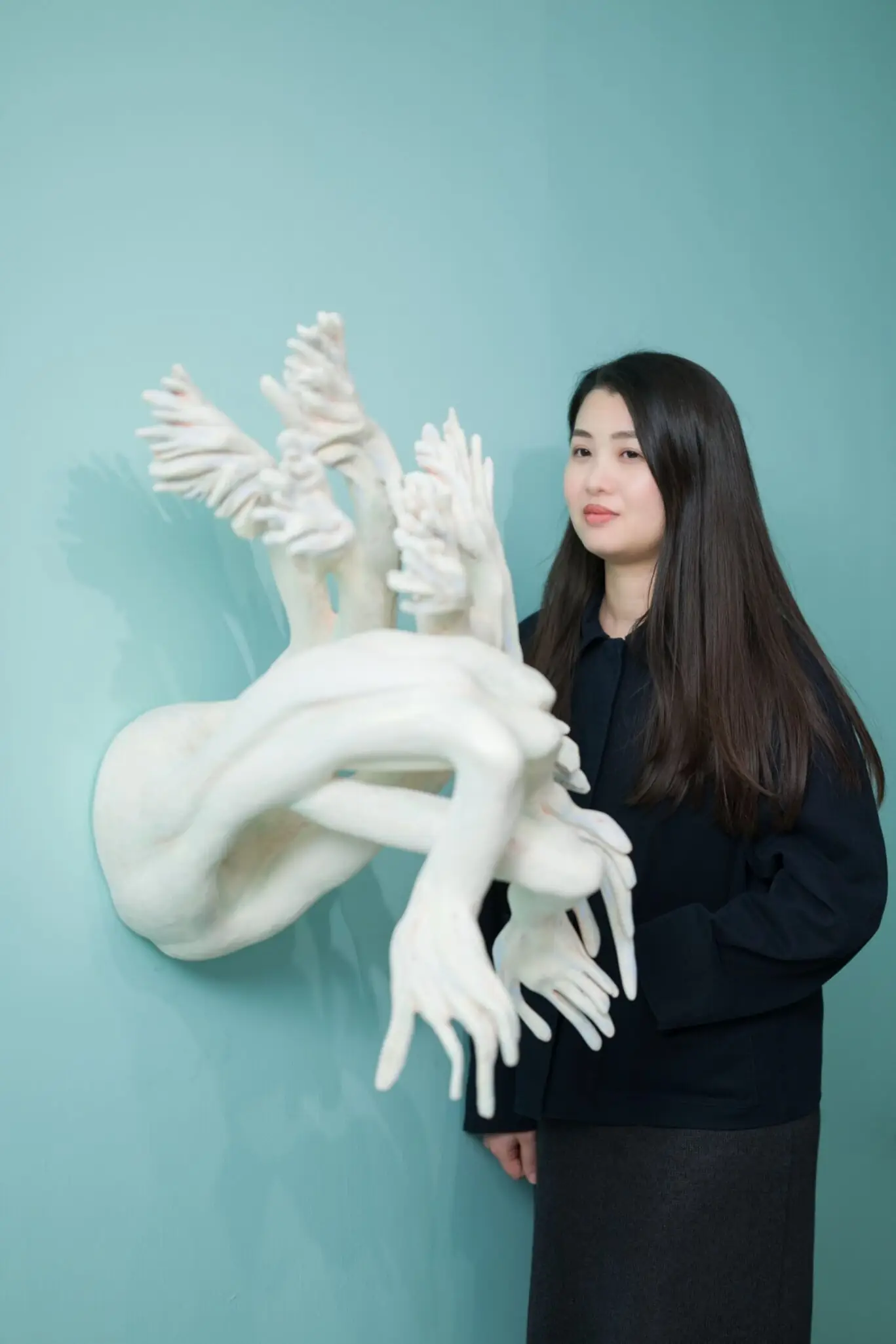
The role of the body, especially the hands, is a vessel of unspoken meaning. Body language in her work reveals what words cannot: it conveys tradition, social change, and personal history. Through gesture and material, she mirrors the inner life of the subject and the nature of work itself.
Rivian Cheung
Trial Piece C60St90>C100St50 (2025)
Rivian Cheung is an artist based in Hong Kong whose practice focuses primarily on sculpture. She researches and explores the nature and potential of natural materials, frequently using the physical deconstruction of plants as a primary medium. In recent years she has adopted traditional paper-crafting techniques, seeking to incorporate folkcraft skills into sculptural practice. While manipulating various materials for personal expression, she also emphasises showcasing their distinct characteristics.
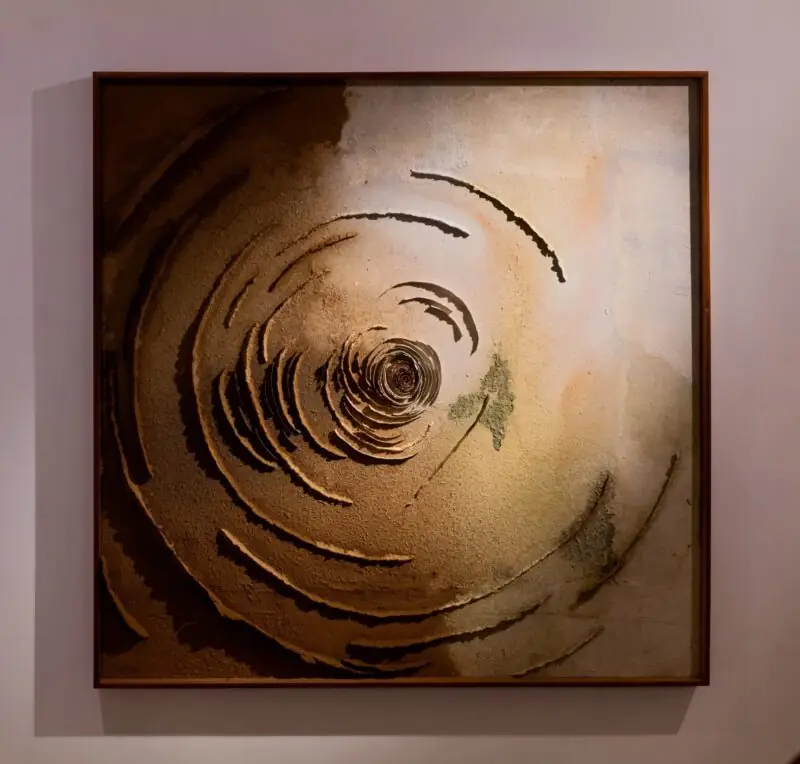
In the artwork “Trial Piece C60St90>C100St50,” every fibre of natural material carries its own story. Born from trees and unprocessed plants, these fibres bear the marks of time and the strength of nature. The colours and textures of these materials, originally by-products of the natural world, are redefined in her hands. Through “Trial Piece C60St90>C100St50,” she is not only created a static artwork but also eternalised a dialogue about materials, techniques, and her understanding of contemporary art on paper.
Sze Wai Wong
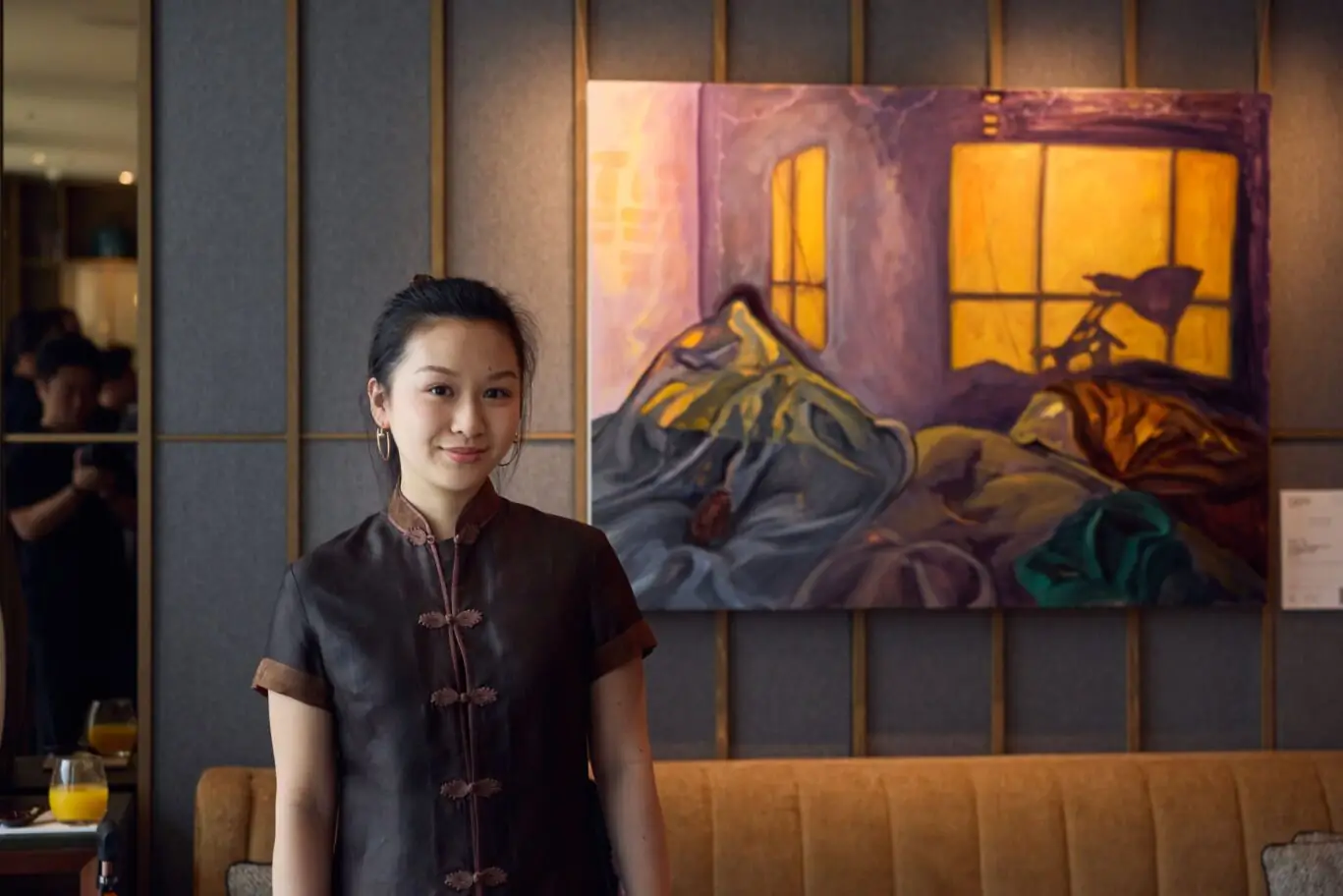
Freud’s Room (2024)
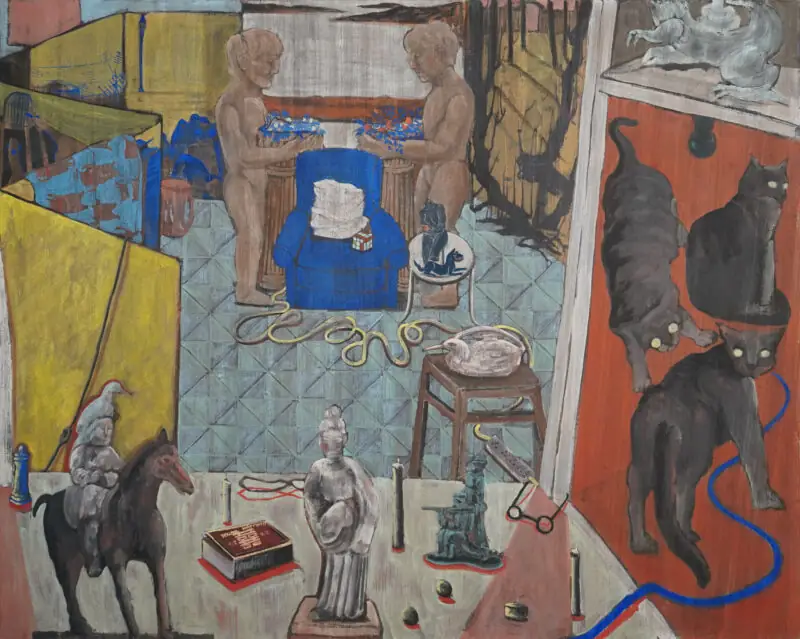
Wong Sze Wai explores the interplay of memory, imagination, and history through spiritual landscapes that merge personal and collective narratives. She is fascinated by abandoned spaces and forgotten objects; their silence speaks to her own feelings of loneliness
and fear of abandonment, resonating with hidden childhood memories.
She employs ancient grotto techniques, layering clay, mineral pigments, and ink to build textures that mimic the passage of time. These methods allow she to convey depth, both physical and emotional, as each stratum represents a moment preserved, altered, or erased. Her paintings often depict playgrounds, homes, and backyards, places that once held life but now exist as remnants of past human activity.
Tobe Kan
Betwixt/Arcane 2 (2025)
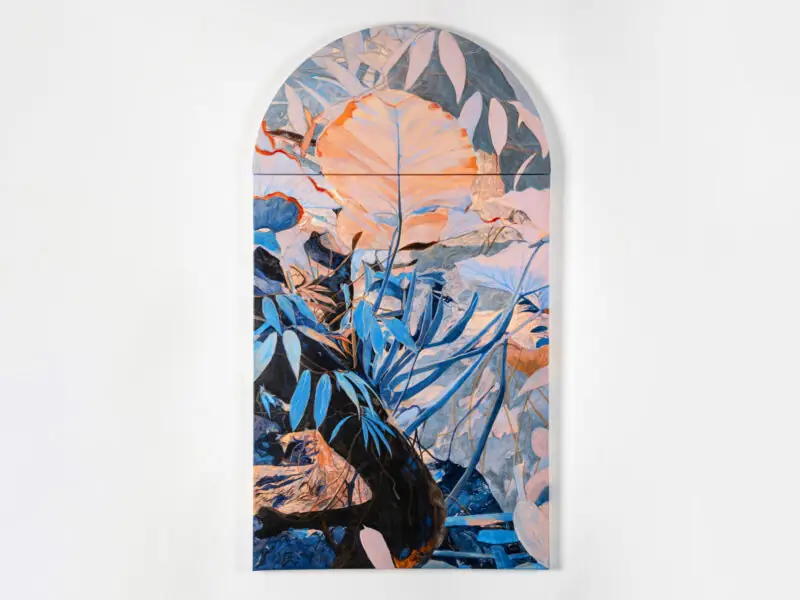
Tobe Kan practices centres on close observation of vegetation coexisting with human environments, often drawn from daily walks and parks and botanical gardens. She works across painting, drawing, and installation, with ongoing interests in liminality, impermanence, distance, and identity.
These works emerged from reflection on identity shaped by time spent in the UK and Europe. I am drawn to spaces that are neither fully private nor public, neither settled nor transient. A space in The Hari offers temporary inhabitation, familiar enough to feel safe, yet shaped by many lives passing through. The works hope to resonate with experiences of drifting between places and moments, learning how to inhabit the present while carrying memories that cannot be shed, only re-rooted.